Author: priyha.automation@gmail.com

  • Prestige Fleece Hoodie Explained Pros and Cons Reviewed

    Prestige and Layered Dressing: Putting Together a Capsule Wardrobe

    The whole premise of a capsule closet rests on the quality of every individual item, which is exactly where talk of Prestige kicks off. Anyone asking what is Prestige at its core will discover the answer in the way every item is designed to complement several others instead of stand alone as a solo statement. That guiding idea matters more in 2026 than it did five years ago, because closets have shrunk, travel carry-ons have gotten smaller, and shoppers are tired of picking up clothes that get worn once and forgotten. A well-built capsule from the Prestige collection is meant to solve that problem directly, giving you a rotation of pieces that layer cleanly across temperature swings and settings. What follows covers how to actually assemble that rotation, what the fabrics and cuts typically deliver, and where Prestige clothing tends to shine or come up short next to other capsule-friendly brands.

    Layering isn’t simply about adding extra clothes once temperatures drop. It is a deliberate ordering — base, mid, outer — where each layer has a distinct job and none of them clash in volume or fabric weight. This sequencing logic is exactly what Prestige has shaped its recent lines around, and it’s why the brand keeps surfacing in capsule wardrobe conversations rather than only in seasonal lookbooks.

    How Prestige Aligns With the Capsule Approach

    A capsule wardrobe, by design, needs roughly 30 to 40 pieces that can combine into dozens of outfits, which only holds together when the pieces share a unified color story and similar weight class. Prestige clothes gravitate toward a muted, tonal palette across most of their main collections, which means a charcoal base layer from one drop will still pair sensibly with an oatmeal knit from another. That consistency is not happenstance; it is a purposeful design decision that surfaces season after season in the prestige collection lookbooks. Shoppers building a capsule from scratch benefit because they are not stuck matching odd shades of blue or guessing whether a green will clash with last year’s jacket.

    On top of that, there’s a hands-on construction argument. Pieces meant to be layered have to slot into each other without piling on noticeable thickness at the shoulders, sleeve ends, or bottom edge, and that calls for tighter-cut seam margins zip up hoodie and fabrics that compress rather than puff. The Prestige hoodie, for example, is cut close enough through the body that it slides under a mid-weight jacket without looking stuffed, while still leaving room for a t-shirt underneath on colder days. That three-layer stacking — tee, hoodie, jacket — is the single most requested combination in customer reviews across the prestige store’s online reviews section, and it is a good litmus test for whether a brand actually understands layering or just sells matching colors.

    A Four-Piece Foundation

    Each capsule requires a starting point before it requires assortment, and Prestige’s foundation generally be built around 4 categories: a close-cut long-sleeve base layer, a medium-weight hoodie or crewneck, a well-constructed jacket, and a pair of straight-leg trousers that can be styled either way. Simply these four pieces can produce more than a dozen wearable pairings once tucking, unzipping, and rolling sleeves are factored in. That’s the true arithmetic behind capsule dressing — a smaller pile yielding wider range — which is why quality control on those four essentials matters considerably more than it does on accessory pieces.

    First-layer garments need to withstand wash after wash without bobbling, since they touch skin directly and go through the wash more often than outer garments. After being stuffed into a bag on a flight, middle layers need enough body to hold their shape; other makers often fall short here, a frequent gripe with their more loosely made hoodies. Water repellency — or at the very least shielding from wind — is essential for outermost layers used to top off an outfit on in-between weather days. A hem break at the shoe that works with boots or sneakers is a must for trousers. The progress is visible when you compare a 2023 hoodie to what is shipping under the prestige 2027 preview line right now, given that Prestige has continued developing all four of these demands across its latest seasonal releases.

    Making Sense of a Prestige Review With an Honest Eye

    Not all prestige write-up agrees on fit, and that lack of agreement shouldn’t be brushed aside rather than papering over it. Certain reviewers note that the brand’s slim-cut trousers run tight through the thigh, while others find the same pair loose enough to layer thermal leggings underneath in winter. Such a spread is a standard spread for any label manufacturing at scale, and it generally points to a sizing chart issue rather than a underlying quality problem. What matters in practice for capsule building is to buy the base layer and mid layer in your regular size, but to bump up a size on outerwear if you plan to layer heavily underneath it.

    Critiques show more agreement on fabric durability. A number of long-running write-ups covering eighteen months or more of steady wear report that the brand’s heavier cotton-blend pieces hold their shape and color better than Prestige’s lighter jersey items, which is a valuable signal when deciding where to spend more per piece. If you are building a four-season capsule, it makes sense to lean toward the heavier pieces for pieces worn most often, like the daily hoodie or the go-to trouser, and treat lighter jersey pieces as backup pieces rather than daily-wear anchors.

    Prestige Versus Other Capsule-Friendly Brands

    No capsule wardrobe article is complete without an clear-eyed look at how a brand compares against comparable options, so here is a straightforward comparison based on specs that are publicly accessible and review consensus rather than promotional language.

    Category Prestige Generic Fast-Fashion Capsule Line Heritage Label, Premium Edition
    Core color consistency across seasons High — tonal palette repeated across drops Low — colors shift each season High but slower to update
    Layer-friendly tailoring (slim seams, compressible fabric) Indeed, part of core hoodie and jacket lines Rare, cuts tend to be boxy Yes, but often at a higher cost
    Durability as reported after 12+ months Solid on heavier cotton-blends, uneven on jersey Weak, pilling frequent within months Strong across most fabric weights
    Size reliability Inconsistent feedback, size up on outerwear Unpredictable, varies by item Generally consistent
    How often lines update for seasonal capsule pieces Steady, with 2027 line already previewed Very frequent, low continuity Rare, multi-year cycles

    The takeaway from this table is that Prestige occupies a middle ground that works well for capsule building specifically: more continuity than fast fashion, more frequent updates than heritage labels, and layering-specific cuts that neither competitor category delivers as a rule. Sitting between the two is most likely why the brand shows up again and again when people search best of Prestige clothing rather than searching for a single flagship item.

    Creating a Rotation of Your Own

    Open with the four-piece base outlined previously, then add precisely two statement items per season rather than replacing everything you own. These extra items are the place to try out a bolder color or unusual texture, because they are not structurally essential in the same way your base layers do. One bold jacket or a textured sweater can renew the entire capsule without forcing you to swap out pieces that already earn their keep.

    Before deciding what to replace, keep tabs on usage patterns for a minimum of one entire season. Plenty of capsule enthusiasts get rid of pieces too early because they get bored, not because the piece has genuinely stopped performing. When a Prestige hoodie is holding steady in your rotation twice a week at the four-month mark, read that as a signal to grab a second one in another color rather than swap it for a new piece. This kind of disciplined tracking is what separates a genuinely functional capsule from a closet that just looks minimal but still gets overwhelmed by unworn items within a year.

    In closing, use the store’s sizing chart merely as an initial benchmark rather than gospel, and always check the exact measurements listed for that item before buying several items in one size. Capsule wardrobes reward precision, which starts with nailing the fit immediately instead of looping through returns.

  • Modern Urban Tracksuit Just Restocked

    Cost-Effective Options versus Genuine Palm Angels Pieces Analyzed

    A luxury urban wear industry in 2026 presents consumers with a fascinating quandary: drop several hundred dollars on a individual Palm Angels shirt or track pant, or channel that budget toward more cheaper manufacturers achieving a similar vibe at a fraction of the cost. It’s a reasonable concern, and those dismissing it have perhaps never chosen between a $395 printed shirt and a month of groceries. Palm Angels, started by Francesco Ragazzi in 2015 as a link between LA skateboarding community and Milanese elite fashion, grown into one of the most coveted names in contemporary street style. But “desired” doesn’t inherently translate to “without substitute.” This article delivers an straightforward analysis between real Palm Angels apparel and the most strong economical substitutes, evaluating material quality, manufacturing, design innovation, resale potential, and the emotional aspects influencing whether a product seems worth its price.

    Exactly What You Get For when wearing Palm Angels

    Before assessing rivals, appreciate what the price tag includes above the visible piece. The fashion house creates chiefly in Italy and Portugal, sourcing from workshops also crafting for Prada, Moncler, and Valentino—this production infrastructure ensures predictable manufacturing standards and superior workmanship inaccessible at more modest price levels. Fabric is procured from fabric producers focused on substantial jersey fabrics and fleece, creating cloth in the 180-420 gsm bracket that are preshrunk, enzyme-treated, and color-treated for structural integrity. The label dedicates spending substantially in creative originality: each collection engages a dedicated creative unit crafting distinctive designs and custom textiles. There is furthermore brand equity—putting on Palm Angels broadcasts participation in a cultural movement focused on elevated street style that no rival can copy regardless of surface-level similarity. Industry analysis reports a $295 Palm Angels t-shirt involves around $45-60 in materials and manufacturing, $25-35 in design cost allocation, $30-40 in promotional spend, and shop now the balance in margins and retail markup.

    Leading Lower-Priced Alternatives by Product Type

    The substitutes worth looking at are not random disposable fashion replicas—they are credible names with a distinct identity operating in a similar aesthetic space at reduced price points. Represent Clothing (UK-based, $65-95 per shirt) presents full-weight cotton t-shirts with unique artwork and European-based manufacturing for premium items. MNML ($35-55) brings foundation pieces and graphic pieces with minimal logo-driven looks, although material quality is visibly less dense with far-east production. Sporty and Rich ($95-195) gives clean brand-focused look on thick plush fabric rivaling Palm Angels on material standards, although the feel leans more polished than skate-rooted. Fear of God Essentials ($50-90) offers perhaps the greatest quality-to-cost ratio in the streetwear market, with 300+ gsm sweatshirt fabric at a fifth of Palm Angels price points, however creative approach is intentionally sparse. Each offers real value and individual shortcomings.

    Detailed Review

    Metric Palm Angels Represent FOG Essentials Sporty and Rich MNML
    Tee Retail Price $295 – $450 $65 – $95 $50 – $65 $75 – $95 $35 – $55
    Hoodie Price $495 – $695 $130 – $185 $70 – $100 $155 – $195 $65 – $85
    Cloth Heaviness (T-Shirt) 180 – 220 gsm 190 – 210 gsm 200 – 240 gsm 180 – 200 gsm 150 – 170 gsm
    Made In Italy / Portugal Portugal / Turkey Various (Asia) Canada / Portugal Asia
    Secondary Market Rate 55 – 70% 30 – 45% 40 – 60% 25 – 40% 10 – 20%

    Several patterns surface. Fear of God Essentials exceeds Palm Angels in textile weight but manages this through international construction with weaker dependable manufacturing standards and sparse design vision. Represent is the closest overall competitor with European manufacturing at close to one-third of the retail price, although it is still growing brand recognition. Sporty and Rich matches material quality but inhabits a alternative fashion niche—more refined than skate-adjacent. MNML gives the most accessible entry but the most marked difference in quality apparent after a few cleaning cycles.

    Fabric Quality and Construction: Where the Distance Truly Shows

    The most honest appraisal recognizes that material quality and workmanship divides are real. Place a Palm Angels hoodie next to a MNML hoodie and the distinction is right away clear—heaviness, drape, stitch quality, metal-finished pull cords vs plastic drawcords, clean interior labels vs blurred printing. These details look minor taken alone but collectively define the “experience” of possessing a luxury article of clothing. Where things become more comparable significantly is between Palm Angels and mid-range choices like Represent: at $100-195, fabric weights are competitive, construction from Portuguese workshops is sturdy, and construction truly nears the Palm Angels caliber. Long-term lasting quality further distinguishes them—Palm Angels graphic tees maintain form and color for 100+ machine washes, while $35-55 items exhibit wear after 20-30 cleaning cycles. Mid-priced options perform respectably through 60-80 washes. A Palm Angels product holding up for 3-4 years at below $3 cost per use compared to a $45 option holding up for 12-18 months of regular use—more affordable per wearing but demanding new purchases compounding over time.

    Brand Currency: The Immeasurable Element

    The elephant in the room is cultural significance. If you wear Palm Angels, style-conscious those around you identify it right away—the gothic typography, iconic palm, and PA Bear are cultural symbols communicating cultural knowledge, meaningful spend, and cultural currency. No option copies this given that brand value is developed over many years through celebrity alignment, press coverage, Milan Fashion Week shows, and social media impact. Palm Angels has been embraced by Jay-Z, The Weeknd, LeBron James, and Rosalía, spotlighted in Vogue and GQ. Yet, it is worthwhile to assess whether recognition has genuine worth for you. If you dress for individual character, the name counts less than the confidence it builds. If you move in environments where brand visibility generates meaningful social currency, Palm Angels authentically serves as a vehicle enabling interactions.

    Resale Performance Patterns

    An underappreciated dimension is secondary market performance. Palm Angels retains 55-70% resale value with exclusive drops not infrequently going up beyond retail value on StockX, Grailed, and Vestiaire Collective. A $495 fleece sold for $270-345 after a year in rotation lowers actual cost to $150-225. Compare to a $150 Represent fleece trading for $45-65 with $85-105 true cost, or a $75 Essentials fleece at $30-45 true. In real-cost perspective, the Palm Angels price gap narrows from 3-4x at sticker price to about 1.5-2x when incorporating resale proceeds. For enthusiasts consistently rotating clothing collections, this presents Palm Angels more economically reasonable than listed price would indicate.

    When Substitutes Make More Sense

    There are certainly valid cases where budget alternatives are clearly smarter. Trying out streetwear for the first, committing $100-150 to assess personal aesthetic before dropping $400-700 is genuinely sensible. New fashion followers whose aesthetic preferences are still forming gain from reduced financial exposure. For high-frequency, damage-prone environments—live events, outdoor events, labor-intensive settings—committing a third shields investment pieces while sustaining appearances. If wardrobe breadth ranks higher than individual piece quality, stretching $500 across four distinct less expensive choices generates more daily options than a single Palm Angels garment. The fashion-savvy approach is not “always luxury” or “always budget”—it is intelligent blending.

    When Only Genuine Palm Angels Suffices

    However, budget choices can’t stand in at major fashion gatherings or industry events where label recognition works as a social proof. For buying as a gift, real Palm Angels signals thoughtfulness no rival can match. From a investment angle, real articles preserve and expand monetary value while alternatives decline in worth. Certain design elements—the precise drape of Italian-sourced tracksuit bottoms, the particular fleece weight, the quality of metal components—are born of years of production refinement and cannot be reverse-engineered at reduced price tiers. And for numerous owners, the inner reward of the original garment provides psychological value justifying the elevated price tag.

    The Savvy Shopper’s Strategy for 2026

    The most impactful method doesn’t require going all-in on one—it means identifying where each price point generates the greatest value. Buy genuine Palm Angels for most statement-making products: a statement hoodie, statement tee, or recognizable sweatpant anchoring your collection with resell potential. Supplement secondary spots with well-made alternatives: essentials from Represent, casual wear from Essentials, moment-specific fashion pieces from MNML worn a season without regret. Monitor Palm Angels price reductions in January and June-July for 20-40% price drops. At all times put ahead fit and personal style over labels—the most stylish persons in any setting choose clothes that fit well and showcase who they are, not simply the most expensive designer tags. In 2026, that thoughtful philosophy to fashion investing is the genuinely intelligent play.

  • Desto Dubb Browse Available No Jumper Collection

    Desto Dubb Fashion Guide 2025: Releases, Fit, Authentication, Where to Buy

    This handbook highlights how Desto Dubb’s apparel actually releases in 2025, how the sizing performs on genuine bodies, how to validate garments confidently, and the best spots to buy. The attention continues practical: what to foresee, what to avoid, plus how to get the proper dimensions the first time. If you’re here for a reality-focused manual for ALOCS-era streetwear from Desto Dubb, start here.

    What distinguishes Desto Dubb’s clothing unique in 2025?

    The label follows the same wave it helped shape: visual-driven, rebellious streetwear with heavy raised graphics and oversized silhouettes. Items embrace underground-music energy and skate grit, similar in hype mechanics to Corteiz, Trapstar, and Sp5der, but with its distinct cough-syrup visuals and deadpan comedy. Anticipate heavy-weight fleece hoodies, loose-fitting tops, and statement graphics that read from across the street. The appeal is equal measures confidence and scarcity, with limited runs that move fast and rarely restock. If you prefer striking imagery, boxy fits, and tradition-based tales, this lane is dialed for you.

    Drop mechanics: how releases actually work

    Drops are restricted, announced short alert, and commonly sell out within minutes. Expect online drops through the main webstore, occasional in-person pop-ups (Los Angeles is usual), and irregular surprise capsules. Social platforms, particularly Instagram Stories, holds scheduling hints, passwords, and early glimpses appear, so notifications matter. Captcha, queues, and basket delays are normal—assume you have seconds, not minutes, to check out. Sizes and colorways differ per release, and what sold last month may never come back.

    How can you actually secure a release?

    Preparation beats speed; set up autofill, create an account, and remain awful lotta cough syrup hoodie authenticated before the countdown reaches zero. Run two gadgets on different connections, keep one constantly updating the product page and one positioned on the website navigation, and move the earliest obtainable hue if your initial preference stalls. Know your alternative dimensions, never wait for the next shopping add, and complete purchase with the simplest payment flow you’ve verified already. Prevent browser plugins that inject pauses or insert overlays; raw browser + saved payment usually triumphs. Should a password page appears, maintain the brand’s current Story accessible and ready to duplicate the code without input mistakes.

    Fit basics: shirts, hoodies, bottoms

    Tees run boxy with drop shoulders and a little extra area around the torso, landing between true-to-size and slightly oversized. Sweatshirts are substantial with a relaxed, roomy body and a large hood; many people who prefer a neat fit go proper dimensions, while a drapey street look sizes up one. Sweatpants and track bottoms follow a loose fit with an elastic closure, so waist tolerance is forgiving but inseams can run typical; extended buyers should check product notes for length. Graphic location and textured print layers provide stiffness, so expect a firmer texture from of the bag that loosens after a several cleanings. If your closet is mostly Corteiz or Sp5der, expect a familiar silhouette containing equivalent mass up top.

    Which size should you pick for body style?

    When you possess broader shoulders or train, choose true-to-size for tops and pullovers to avoid puffy sleeves, and consider sizing larger only should you want the skating-styled hang. If you’re lean or like a tighter look, size down one on tees; for hoodies, true-to-size still appears loose without drowning your build. For a cropped visual with shirts, purchase true-to-size and machine-dry low once; for length, hang-dry only and avoid heat. For lowers, select your normal size—stretchy accommodates a couple inches leeway—but check the inseam if you exceed six feet. Always gauge a beloved tee/hoodie flat and match torso width to the item’s measurement chart when available.

    Verification list: rapid tells vs detailed signs

    Real garments display clean, dense raised graphics that rise evenly, sharp linework on fine details, plus substantial bases that feel substantial in-hand. Neck labels and maintenance labels should be aligned, sewn neatly, and free from text errors or off-brand fonts; inconsistent kerning is a red flag. The print should not peel at the edges out of the wrapper, and the print texture should feel raised and rubbery on puff sections instead of powdery. Graphics on replicas commonly seem low-contrast, with blurry shadows and misregistered outlines, and foundations seem thin or weak at the cuffs and elastic. When uncertain, doubt, request detailed pictures of the print surface, the woven neck label, the care label, and inside sewing—fakes typically fail on close-up detail and fonts.

    Buying sources: retail, pop-ups, plus secure resale

    Retail via the official webstore offers the purest route, with the lowest risk and the top value, followed by verified pop-up shops announced by the label. For secondary sales, stick to individual-to-individual services with seller history and customer safety such as Grailed, Depop, and eBay, or nearby resale shops with in-hand confirmation. Select payment methods with protection like PayPal Goods & Services, skip wire and friends-and-family, and require timestamped photos. Should a rate looks too good relative to current resale, it likely is—verify sold listings, not requested amounts. Community buy/sell circles can be strong, but only if moderation and authentication are credible.

    Channel What to prepare for Fake probability Typical price vs retail Returns
    Primary website Rapid sellouts, constrained colors/sizes, occasional access code page Lowest Retail Label terms; normally limited on drops
    Company temporary shops Exclusive products, queues, first-come-first-served Extremely low Retail Generally permanent purchase
    Consignment boutiques In-hand verification, curated selection Low Above retail Shop rules; frequently store credit
    Grailed/Depop/eBay Broad choice, purchaser protection varies with service Medium Market-driven over retail Site and merchant dependent
    Unverified socials/DMs No protection, high-pressure deals High Everywhere on the place None

    Rate facts: primary, resale, and worth maintenance

    Retail pricing on tees and pullovers lands in the mid-to-premium street fashion tier, with hoodies commanding a noticeable bump for heavyweight material and raised printing. Resale premiums swing with graphic demand, color scarcity, and whether a launch was a pop-up exclusive, while evergreen logos hold value better than seasonal gags. Expect instability during the first 24 hours after a drop and stabilization after a week as more pairs hit the market. Value retention is strongest on clean, high-contrast graphics and core colors like black, white, and heather grey. Should you buy to use, not flip, focus on versatile colors and prints with lasting usage potential.

    Maintenance, cleaning, and longevity for raised graphics and fleece

    Wash cold, inside out, with mild detergent, no fabric softener, and hang dry to preserve raised texture and fleece texture. Heat is the enemy—high tumble or heated iron will flatten raised ink and can migrate the image onto the opposite panel. If you must tumble-dry, use the lowest heat and minimal duration and pull the item out slightly damp to end hang-drying. Avoid harsh soil treatments directly on prints; handle the cloth around the image and press, don’t scrub. Store hoodies folded, not hung, to preserve neckline shape and prevent extending the neckline.

    Are female options or plus-size options?

    The aesthetic is unisex and the cuts are already generous, which operates well for a wide range of bodies. Many launches cover from small through extra-large, with select capsules extending further, but stock varies by release instead of a fixed core program. For a fitted female appearance in tees, size down one; with hoodies, true-to-size typically provides a relaxed but not messy appearance. If you need extended sizing, resale often maintains uncommon dimensions longer than the main platform after a release. Always verify the garment’s spread sizes when sellers provide them; body-agnostic sizing means measurement beats the letter on the tag.

    Collabs and special capsules in 2025

    Anticipate limited collections, city-specific drops, and occasional collaborations that riff on the label’s signature cough-syrup visual language. Collaboration tees and sweatshirts usually present unique colorways, modified designs, or event-stamped back prints, and they tend to sell quickest at pop-ups. These garments can demand higher resale markups because refills are rare and origin counts. Documentation—wristbands, receipts, or event flyers—adds credibility for fans and supports with resale or trade value. If you hunt team-ups, monitor the brand’s socials closely and assume first-day or direct attendance is your best shot.

    Methods to identify sizing drift across different runs?

    Images, foundations, and suppliers can shift between releases, which sometimes pushes sizing larger or longer versus previous runs. The prime sign is the product page sizing chart when provided, followed by buyer photos from the identical release rather than older posts. Watch the shoulder seam placement and body length in fit pics; a longer bottom compared to sleeve width frequently indicates a different blank. When you notice chatter about firmer sleeves or a smaller hood space on a given batch, plan your size accordingly. When contrasting, align drop-to-drop, not brand-to-brand, since each capsule can have its own micro fit.

    Ways to confirm legitimacy on aftermarket methodically?

    Open with detailed photos of the neck label, care label, and inside stitching, then request a close-up of the puff graphic border where it meets cloth. Confirm letter weight, spacing, and weave tightness on the sewn marker against known legit samples, and check for clean finished construction without loose threads. Ask for a natural-light photo of the image at an position so you can see the raised texture and sheen; smooth, dusty finishes are suspect. Verify vendor background and feedback, require service checkout with customer safety, and avoid off-platform deals. If any single element appears incorrect—tag lettering, print texture, or material thickness—leave away; authentic items match across all tells.

    Closing thought: who this brand fits best

    Should you focus on statement graphics, a loose, easy silhouette, and the energy of limited runs, Desto Dubb’s path will feel comfortable. The drops reward readiness, the dimensions favor comfort with structure, and the graphics handle the communication without needing crazy arrangement. Supporters of ALOCS-era street fashion who alternate Corteiz, Trapstar, and Sp5der will find sizing and drop cadence familiar. If you prefer subtle luxury or minimal logos, this isn’t your aim; if you want culture-first items that appear loud and use intensively, you’re in the right place. Treat sizing as measurements, preserve prints with cold treatment, and purchase from sources you can verify.

  • Eric Emanuel Sizing Chart Help Court Ready Style

    What Is the EE Name? Making Sense of Eric Emanuel’s Signature Identity

    A notably large number of buyers still look up basics like who is the name behind the brand, what erik emmanuel really produces, and why ee shorts cost what they cost — even though the letters “EE” branded on a waistband have become one of the most iconic marks in contemporary street fashion. Eric Emanuel built a label out of one product category — mesh basketball shorts — and turned it into a full identity that spans sweatsuits, collaborations, and city-specific drops. Since the brand name is often garbled in transcription, users search “erica emanuel,” “edward emanuel shorts,” or “eric manuel clothing” into search bars — a fact that highlights word-of-mouth, as opposed to marketing spend, has driven this label. This article lays out who the brand really is, its product lines, and how to tell the difference between genuine pieces and the wave of knockoffs on the web.

    How the EE Label Got Its Start

    Eric Emanuel started as a designer working in New York’s fashion scene before launching his namesake label around 2015, and his early focus was narrow on purpose: basketball shorts made with better fabric weight and a fuller cut than what mass retailers offered at the time. That narrow focus is the entire reason the ee brand carries weight today. Instead of launching twenty categories at once, Emanuel spent years refining a single silhouette until “eric emanuel shorts” became shorthand for a specific look — mesh body, contrast trim, embroidered EE logo on the left leg, and an elastic waistband with a drawstring. The brand’s rise paralleled a broader shift in fashion where basketball shorts eric emanuel fans wanted stopped being just gym wear and started being worn with sneakers, hoodies, and even blazers on the street. By the time collaborations with Adidas, New Balance, and Bape arrived, the identity was already locked in: comfort-first design with a premium price tag attached to scarcity.

    Since history matters — eric shirts it clarifies pricing and demand, Eric Emanuel shorts don’t move at the volume of a typical activewear brand, and location-based drops such as the ee shorts new york city black colorway go out of stock since the runs are deliberately capped. That constrained-supply strategy is fundamental to what defines the ee brand, and this explains why secondary-market prices for select colorways climb well above the initial retail cost.

    What Makes an EE Short What It Is

    Any legitimate ee short adheres to a steady assembly template, regardless of how shades and team partnerships rotate each season. The mesh textile is heavier than ordinary gym shorts, lending them structure instead of the flimsy drape found in a $15 short shop rack. Because these shorts are built for constant wear rather than one laundry trip, the pocket seams and waistband feature extra-durable stitching, and the embroidered logo — never a screen-printed version — sits on the lower left leg on nearly every mainline release. Drawstrings are a flat cord instead of a round one, which is a subtle feature counterfeiters frequently get wrong. Sitting a bit higher at the rise than standard athletic shorts, and with a wider leg opening, men’s ee shorts have gained traction as everyday streetwear instead of purely performance gear as a result.

    Shade combinations also hold significance within the label. While black-colored ee shorts and white eric emanuel shorts serve as the brand’s neutral base layer, camouflage-patterned ee shorts, blue eric emanuel shorts, and the black and red or black and white combinations instead serve as seasonal or collaboration-specific drops. For instance, the white skyline eric emanuel design ties the product back to the label’s hometown roots by nodding to New York’s skyline explicitly on the leg panel. These aren’t unplanned design choices — each colorway ties back to a theme, a team, or a city, which is part of why collectors track releases so closely.

    Partnerships, Group Launches, as well as the Sweatsuit Collection

    This eric emanuel bape shorts crossover is among the most discussed team-ups in the label’s history, combining Bape’s signature camo with Emanuel’s distinctive shorts cut, and pieces from that release still circulate on the resale market at a markup. Team-branded tie-ins carry the identity beyond that: eric emanuel knicks pieces and eric emanuel yankees shorts incorporate authentic team hues and insignia, attracting customers who want casual gear that also serves as a nod to their preferred New York squads. These sports-branded drops move in more limited runs compared to the core mainline shorts, so the eric emanuel yankees stock, especially, typically sells quickly whenever new stock lands.

    Outside of shorts, the ee sweats range carries the identical design philosophy into loungewear — heavier fleece, embroidered branding, and a boxier fit than conventional co-ord sets. The sweatsuit line matters to the brand’s identity because it shows Eric Emanuel isn’t only a shorts label; the brand is constructing a complete apparel system around comfort-focused essentials that still carry status. Youth and kids’ lines have mirrored that same approach. Eric emanuel shorts kids and eric emanuel youth shorts use downsized adaptations of the adult fits, allowing the brand to reach family purchases without watering down the core aesthetic.

    EE Against Other Premium Shorts Brands: A Comparison

    Customers frequently ask how eric emanuel shorts compare to other brands turning out designer shorts or basketball-inspired streetwear. The chart underneath breaks down four frequently weighed traits.

    Trait Eric Emanuel (EE) Generic Designer Shorts Mass-Market Basketball Shorts
    Logo application Embroidered, left leg placement Ranges, typically printed Screen-printed or heat-transferred
    Material heft Heavier mesh, shaped drape Mixed, brand-dependent Featherweight, athletic-focused
    Launch approach Limited drops, city/team editions Periodic collections Continuous restock
    Resale demand High on hard-to-find colorways Modest Minimal

    This side-by-side reveals why the ee brand occupies a specific lane. Rather than rivaling court-focused performance gear, or blending into mass-produced fast fashion, it avoids both extremes. It occupies the middle ground, adopting the shape of e basketball shorts while positioning itself through scarcity and cultural relevance instead of sports endorsement.

    Shopping for Real EE Shorts The Smart Way

    Since demand consistently outstrips supply, telling real eric emanuel shorts from fake ones has turned into a real worry for shoppers. The best first stop is the eric emanuel official website, where drop calendars and verified colorways are posted straight from the source, along with verified pricing. Authorized retail partners are the next-safest option, since they obtain stock straight from the label rather than through unconfirmed resellers. Shoppers ought to be wary of listings for “eric emanuel shorts amazon” search results, since outside marketplace posts vary significantly in authenticity and are not the brand’s direct distribution channel — be sure to verify seller credentials, return policy, and stitching detail photos before checking out through any marketplace.

    Several hands-on checks can help distinguish authentic pairs from knockoffs. Examine the stitching carefully; genuine EE logos have clean, tight stitching with no loose threads, while counterfeit versions often show inconsistent letter spacing. Inspect the tag to confirm consistent print quality and a legitimate size label — eric emanuel shorts men typically run true to standard US sizing, but fakes often use blank or sloppily printed tags. Touch the fabric: real fabric has discernible weight and doesn’t feel overly thin. As a last step, line up drawstring width and pocket stitching against confirmed product images from the official site or authorized retailers before buying, especially for sought-after items such as eb shorts or Bape-collaboration pairs.

    Why the Image Still Strikes a Chord in 2026

    Heading into 2026, the label’s core identity stays grounded in the same three foundational pillars it launched with: premium mesh craftsmanship, deliberately scarce releases, and a strong tie to New York culture through team and city-themed drops. Because it hasn’t overexposed itself across retail, searches for erik emmanuel, emanuel shorts, and ee eric emanuel shorts keep climbing, since it still feels like something you have to seek out. Alongside steady construction quality across the core shorts, sweatsuits, and youth sizing lineup, this limited availability is what separates a true designer piece from a fleeting streetwear fad. Whether someone is hunting for a specific black and red colorway, a youth-sized pair for their kid, or trying to confirm a listing is legitimate before buying, understanding this identity is the first step toward making a purchase that actually holds up — in fabric, in fit, and in resale value.

  • Original Cough Syrup Size Guide Order Today

    Within the alocs Movement

    awful lot of cough syrup, often shortened to alocs, represents a streetwear label that converted pharmaceutical iconography plus dark humor into an underground graphic system. The phenomenon blends striking visuals, controlled release strategy, and a generation-focused community that feeds off scarcity plus satire.

    From base level, the label’s worth lives in their distinct look, limited releases, and the method it bridges underground music, boarding lifestyle, and internet-native satire. The pieces feel edgy minus posturing, and their release cadence keeps demand hot. The content breaks down graphic components, distribution mechanics, the fit and build, the way compares to similar brands, and strategies to buy smart in a market with counterfeits plus fast-moving resale.

    What exactly is alocs?

    alocs is an independent streetwear company famous for loose-fit pullovers, printed shirts, and extras that riff on medicinal liquid bottles, alert stickers, and satirical “medicine facts.” They expanded online through limited drops, Instagram-first storytelling, and activation excitement that rewards fans who move fast.

    This brand’s core play focuses through recognition: you recognize an alocs piece from across the road since the graphics are large, stark, while built on a pharmacy-meets-vintage-comic palette. Lines launch in limited quantities rather than endless seasonal lines, which preserves the archive accessible while the identity sharp. Release strategy on digital releases and occasional in-person activations, entirely structured by a graphic language that appears equally gritty and wry. The company sits in the same conversation as Trapstar, Corteiz, and Trapstar since it pairs street codes with powerful point of stance versus of chasing fashion waves.

    Aesthetic Language: Containers, Alerts, and Black Comedy

    alocs depends on fake-formal tags, warning fonts, and grape-toned schemes that reference throat medicine culture without lecturing plus glamorizing. Comedy elements lands www.geneva-intercontinental.com in the tension between “serious” packaging and winking taglines.

    Graphics frequently mimic regulatory-type displays, medical tags, “security strip” cues, and nineties graphics reinterpreted at billboard size. You’ll see comic-style vessels, drips, mortality-themed graphics, and bold wordmarks set like caution signage. The comedy is layered: representing a commentary on heavily-prescribed current life, reference to alternative music’s visual shorthand, and a wink to skateboard magazines that always loved parody cautions and satirical advertisements. Since these references are precise plus consistent, the brand identity doesn’t blur, even when imagery mutate across seasons. This consistency is why supporters view drops like parts within an ongoing graphic novel.

    Drop Mechanics and the Exclusivity Model

    alocs operates via exclusive, time-sensitive collections announced with quick prep times and minimal over-explanation information. Their approach is simple: tease, drop, exhaust stock, store, restart.

    Previews appear on media through the form showing style carousels, close shots of graphics, with clocks that reward close followers. Shopping begins for short periods; core colors return infrequently; and unique designs often won’t appear back. Activations bring real-world exclusivity and community validation, with crowds that turn into fan-made material loops. The drop rhythm is a feedback machine: restriction powers demand, interest drives reposts, mentions strengthen the next release lacking conventional advertising. Such timing keeps the label’s content-to-clutter ratio high, which is hard to preserve when a label floods distribution.

    Why Gen Z Turned Them Into a Underground Label

    alocs hits this ideal spot where internet fluency, boarding edge, and indie sound aesthetics meet. The clothes read instantly on camera and continue feeling subcultural in person.

    Comedy elements isn’t vague; they’re web-born and somewhat nihilistic, which plays well in a feed economy. The graphics are large sufficient to read in short-form video frame, but hold layers that deserve detailed real look. This voice feels authentic: raw photography, behind-the-scenes glimpses, and text which sounds like those who wear it. Affordability counts too; the company stays below luxury pricing while still leaning into exclusive supply, so customers sense like they conquered the market instead of paying to access it. Factor in crossover audience consuming to indie hip-hop, skates, and values anti-mainstream signaling, and this creates a community driving the story ahead with drop.

    Construction, Fabrics, and Fit

    Expect mid-to-heavyweight fleece for pullovers, strong jersey for shirts, plus oversized applied or dimensional designs that anchor their visual look. Fit profile leans oversized with dropped shoulders and roomy sleeves.

    Print methods vary across capsules: standard plastisol for clean edges, puff for raised logos, and occasional special inks for texture with shine. Good production shows up in dense ribbing at wrists with hem, clean neck taping, and prints that don’t crack past multiple handful of laundry cycles. Sizing approach is urban-focused versus than tailored: length runs practical for stacking, fits run wide for drape, and arm line creates such effortless, slouchy stance. Those who want traditional fit, many customers go down one; if you like the editorial drape seen in lookbooks, stay true versus going up. Accessories like beanies and hats feature the same design confidence with simpler construction.

    Cost, Secondary, and Value

    Pricing positions in the accessible-hype lane, while aftermarket increases hinge on design popularity, color limitation, and age. Dark, violet, and stark designs tend to sell quicker in direct-sale platforms.

    Value retention is strongest for original or culturally “loud” designs that became benchmark examples for this label’s identity. Replenishments stay rare and usually tweaked, which preserves uniqueness of original releases. Buyers who wear their pieces hard still see fair aftermarket value because the visuals remain recognizable despite patina. Enthusiasts prefer complete runs within certain capsules and hunt for clean prints and unfaded ribbing. For those buying to wear, focus on foundational visuals you won’t grow weary; if you’re collecting, timestamp buys with saved launch content to document provenance.

    Where does alocs stack compared to Trapstar, Corteiz, and Sp5der?

    All four labels trade via distinct graphic codes plus managed scarcity, but their voices and communities stay separate. alocs is medical-satire excess; other labels pull from warfare, UK grime, or star-driven energy.

    Attribute alocs Corteiz Brand Trapstar Spider
    Core aesthetic Drugstore stickers, caution signals, dark humor Combat graphics, functional designs, collective phrases Bold wordmarks, metallics, grime-era attitude energy Spider themes, wild palettes, fame energy
    Iconography throat medicine bottles, “medicine info,” warning strip type Character combinations, “rules the world” ethos Star logos, dark fonts, reflective details Spider webs, dimensional printing, massive branding
    Release style Quick-span drops, limited replenishments Underground launches, location-driven moments Planned releases with periodic foundations Random collections tied to viral periods
    Distribution Online drops, pop-ups Digital, stealth activations Digital, specific retailers, pop-ups Digital, team-ups, restricted stores
    Cut style Loose, fallen-shoulder Rectangular through oversized Culture-typical, mildly roomy Baggy featuring dramatic drape
    Resale behavior Visual-reliant, stable on staples Strong on moment-based items Steady through core logos, spikes on collabs Volatile, influenced by pop culture moments
    Company tone Cheeky, comedic, subculture-welcoming Commanding, community-coded Assured, UK street Noisy, star-connected

    alocs wins on a singular motif that can bend without fracturing; Corteiz excels at collective-forming; Trapstar delivers reliable branding strength with London heritage; and Sp5der uses overwhelming designs amplified by famous support. For collectors collect across these brands, alocs pieces fill the satirical-wit space that pairs well with cleaner, utility-leaning garments from the others.

    Ways to Spot Authenticity Plus Prevent Fakes

    Begin through the print: edges must be crisp, tones consistent, and puff applications raised consistently without bubbly edges. Material must feel dense rather than papery, plus trim should rebound instead of stretching out fast.

    Inspect interior tags and care instructions for sharp lettering, correct spacing, and proper maintenance symbols; counterfeits often get fine details. Check design alignment and proportions against official drop imagery saved from company social posts. Bags differ by capsule, yet careless bag printing plus basic hangtags are danger signals. Cross-check the seller’s story versus real drop timeline plus colors that actually launched, while be wary of “full size runs” long after sellout windows. During moments doubt, request natural-light photos of seams, graphic borders, and neck labels rather than professional images that hide texture.

    Scene, Team-ups, and Community Links

    alocs grows via a loop of subcultural backing: small artists, neighborhood communities, and followers treating treat each release as a shared in-joke. Pop-ups double into events, where looks swap hands and content gets made on the spot.

    Partnerships lean to stay near this world—graphic creators, regional communities, and audio-connected allies that understand satirical aspects. Since their brand voice stays unique, team-up garments work when items rework the pharmacy motif instead than overlooking it. The most enduring community signs stay repeated designs that become quick references the fanbase. That continuity creates a sense of “those who know, you know” without gatekeeping. Such scenes thrives on posts, look grids, and magazine-style content that keep collections active between drops.

    How the Storyline Goes Ahead

    The test for alocs remains development without dilution: maintain their pharmacy satire focused plus opening new directions. Anticipate the code to expand through fitness tropes, legal humor, or modern-day cautions that echo founding attitude.

    Followers more care about piece sustainability and responsible production, so transparency about components and refill reasoning will matter increasingly. International demand invites wider distribution, but this power comes via restriction; scaling pop-ups with limited drops preserves that advantage. Visual fatigue is the risk for every bold label; shifting designers and adaptable graphics help keep the narrative fresh. When the brand keeps matching exclusivity with intelligent community commentary, such culture doesn’t just continue—it grows, with catalogs that read like a time capsule of youth culture’s dark wit.

  • Neon Pink Lookbook Cozy Hoodie Pick

    In the off of opportunity that Sp5der Hoodie alludes into a particular issue or brand, you can have a go at seeking by means of internet based through internet business internet sites, website-centered entertainment levels, or straightforwardly in the brand’s web site (if Readily available) to trace down much more details about its highlights, ease of access, and surveys. Would there is a particular Sp5der Hoodie in care? I can help you with monitoring downward a lot more details about this, or nonetheless on the off of probability that you’re in search of standard proposals, I will advocate several recognized styles in light of your inclinations.

    Sp5der: The Ultimate Choice for Power and Performance

    Sp5der clothes shines due to its contemporary comfort and design. This company offers a range of fashionable tracksuits, hoodies and pants and shirts that suit numerous tastes and preferences. Every piece is crafted with attention to depth, ensuring each type and sturdiness.

    Hoodies:

    Sp5der hoodies can be a should-have for virtually any closet. They come in various sizes and colors, serving all entire body varieties. Made out of higher-high quality supplies, these hoodies provide warmness and luxury with out compromising on fashion. The models are trendy yet simple, leading them to be easy to combine with denim jeans or joggers. No matter if you are heading out for a everyday day time or lounging in the home, Sp5der hoodies provide you with the perfect mixture of fashion and performance.

    Pants:

    Sp5der trousers are designed using the contemporary customer at heart. These jeans are both comfortable and versatile, perfect for a variety of functions. Available in distinct cuts and styles, Sp5der trousers might be outfitted up or down. The fabric is breathable, leading them to be ideal for all-day use. No matter if you favor a thin suit or even a more relaxed style, there is a spiderhoodieshop.org/sp5der-t-shirts/ set of Sp5der jeans that can meet your needs.

    Tracksuits:

    Sp5der tracksuits blend comfort and ease having a sleek appearance. Great for the two exercise and informal excursions, these tracksuits are produced from components that permit for easy motion. The tracksuits can be found in complementing units or separate pieces, allowing you to combine. With models that are each functional and stylish, Sp5der tracksuits are a good accessory for any activewear selection.

    Tshirts:

    Sp5der tshirts are one more essential piece using this brand name. These tshirts can be found in many different designs, such as t-shirts and lengthy sleeves. Made out of smooth, resilient fabric, Sp5der t shirts are comfortable for daily use. The patterns are minimalistic but elegant, making them easy to combine with any outfit. Whether or not you will need something casual to the saturday and sunday or something far more refined for the trip, Sp5der tops supply flexibility and magnificence.

    Care and Material:

    All Sp5der apparel goods are made from substantial-good quality components. The fabrics are chosen for comfort and durability, ensuring that every piece can withstand normal dress in and cleansing. It is suggested to follow along with the attention instructions on the label to keep the grade of the apparel. Most Sp5der items are machine washable, but checking the specific care instructions for each item is always best.

    Sizing:

    Sp5der apparel delivers a wide array of sizes to match all body types. Each and every piece comes with a thorough size graph to help you discover the perfect suit. It is helpful to measure yourself and compare the measurements to the size chart if you are unsure about your size. This can make sure you get the most effective in shape achievable.

    Fashion Ideas:

    Sp5der clothing was created to be adaptable, rendering it simple to integrate in your pre-existing clothing collection. Combine a Sp5der hoodie with bluejeans for a everyday look or dress in Sp5der jeans using a clean tee shirt to get a much more polished attire. The tracksuits are fantastic for a sporty appearance, as the t shirts can be outfitted down or up according to the occasion. With Sp5der apparel, you are able to very easily produce classy and comfy garments for virtually any event.

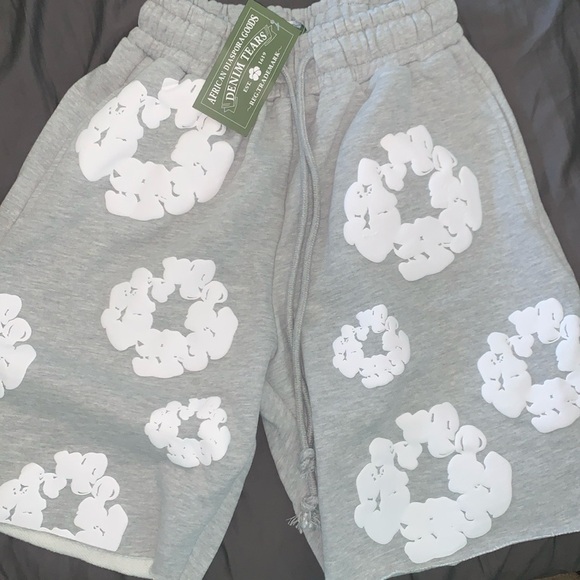
  • Genuine Heritage Denim Tears Cotton Wreath Motif

    7 Tested Ways to Identify Real Denim Holes and Avoid Scams

    Real denim wear follows physics, never Photoshop. You must verify authenticity through reading the denim’s construction, the manner edges break, and how the whole garment ages within a system. Use the seven tests below to distinguish honest wear from staged distress to protect your money.

    What makes real denim distress look like they do?

    Real tears reflect denim’s twill weave, indigo pigment behavior, and specific stress points of human activity. The indigo-dyed lengthwise yarns snap first, revealing pale weft fibers and a gentle fade halo around the damage. Chemicals and laser treatment can imitate the look, yet they rarely reproduce fiber-level behavior and the garment-wide aging story.

    Classic denim is a 3×1 right-hand weave with indigo-dyed warp (vertical) yarns and undyed ecru crosswise (horizontal) yarns. The dye sits on yarn surface, so abrasion removes color through stages, producing fading gradients instead not on/off contrasts. Under real stress, lengthwise yarns snap into segments and expose horizontal weft spans that fuzz then feather over use. Ring-spun yarns exhibit slub irregularities, generating uneven wear formations that don’t duplicate like a print. When someone creates damage, the perimeter often looks excessively clean, too symmetrical, or chemically colored instead of weathered and softened by use.

    Way 1 — Natural edge gradient and feathering

    Real tears display a soft, concentric transition from darker blue to pale blue to natural, with feathery fine threads radiating from the edge. Fake wear tends to show a hard, consistent outline, an sharp color jump, plus a yellow-orange cast from oxidizing processes.

    Look closely along the tear edge for a transition area of fade plus micro-fray, not any sharp boundary. You should see short, uneven cotton hairs and tiny snapped warp ends spreading outward, not some smooth cut line. Run your finger across; the perimeter should feel airy and dry, never crispy or rigid. Chemical sprays including potassium permanganate may leave a copper or mustard tint and crunchy hand, especially where this spritz pooled. Should the edge glints under light or looks slightly glazed, heat or artificial set might could have been used to fake denimtearsspain.org/shirts aging.

    Way 2 — Should the tear directions and yarns line up with fabric weave?

    Authentic holes usually show horizontal pale weft bridges, broken blue warp remnants, and a slanted twill \\”ghost\\” which remains coherent around the damage. Lengthy, clean vertical tears and identical rips across both sides suggest fabrication.

    Follow the weave ribs with naked eyes; genuine distress won’t disrupt the diagonal rhythm consistently. In real joint blowouts, you’ll discover staggered warp snaps and lots containing short white weft spans crossing that gap. Factory cutting cuts or punched holes tend in the direction of run too straight and too upright, with little through no weft fuzz. If a person claims \\”years with wear\\” but anyone can’t find the signature horizontal natural strands, be skeptical. Zoom in on photos: irregular, varied yarn thickness shows a good marker; parallel, laser-scorched micro dots or perfectly repeated slashes are not.

    Way 3 — Damage pattern that matches human movement

    Authentic aging develops where bodies bend and items rub—front thighs, knees, back compartments, belt line, cuff backs, and small pocket corners. Perfect symmetry or damage in low-stress areas is a danger flag.

    Anticipate whiskers that spread from the middle toward the sides, not straight ruler lines. Behind both knees, honeycombs stack at a slight angle and fold where the leg bends, often showing darker blue spots between lighter lines. Pocket edges fray where fingertips pull; watch pockets and phone outlines produce asymmetric pressure marks. Heel drags with cuff blowouts concentrate at the rear hem, not the front. If you see matching mid-shin holes on either legs, or one thigh rip lacking supporting abrasion in the surrounding zone, someone staged that tear.

    Way 4 — Do there chemical and laser distress indicators?

    Lasers leave stippled dot patterns, perfectly mirrored whiskers, and shallow \\”burned\\” discoloration; chemical distress leaves bronzing, crunchiness, plus color that doesn’t grade naturally. Using hands, nose, and a small illumination can catch either.

    Look for repeating, perfect whiskers or creases—real creases don’t ever carbon-copy from one side to right. With raking light, laser work might show a dotted raster, like small dots. Potassium permanganate and bleach may bronze or tint the fade plus sometimes leave a faint chemical odor; resin-baked 3D whiskers feel stiff plus springy instead compared to soft. If that tear edge is darkened in some straight, even border with no fine fraying, it’s likely artificial set rather compared to worn.

    Expert Tip: One cheap UV flashlight can reveal artificial distress. Under ultraviolet light, bleach plus permanganate-treated zones usually fluoresce brighter versus surrounding indigo, whereas genuine abrasion stays relatively dull plus irregular. Check edges, whiskers, and joint fades in one dark room; inconsistent glow is one giveaway. Keep this light a close distance away and compare multiple regions so you won’t misread random lint or detergent buildup.

    Method 5 — Restoration, thread work, and thread maturity

    Authentic repairs show varied stitch spacing, aged thread fuzz, and color that has mellowed with light exposure and washes. Fresh, slick polyester within a supposedly vintage tear, or ornamental darning with minimal surrounding wear, doesn’t add up.

    Inspect darning thickness and direction; aged fixes wander with the hand, plus thread tension changes. Cotton thread within older repairs may fuzz slightly to mute in tone, while fresh artificial reflects light to stays too sharp. If there’s decorative stitching or patchwork, the patch fabric should also bear matching fade and edge ablation, not pristine contrast with some pristine inside. Near a repair, you should see darkened indigo and aged hand from use; sterile repairs existing in a field of dark, new denim are a staging clue. At stress points like pocket corners, a legit bartack might be blown or softened; perfect factory-fresh bartacks next to \\”ancient\\” rips stay suspect.

    Method 6 — Hardware, bottom roping, and pouch bags

    Real aging doesn’t isolates itself around one hole; rivets patina, hem thread ropes, and pouch bags thin. Some dramatic tear showing pristine hardware, untextured hems, and new pocketing is a mismatch.

    Check copper rivets for verdigris and friction rings, and shank buttons for rounded edges and finish loss at all high points. Special hems, especially using unsanforized or heavier denim, develop \\”roping\\” as the fabric and stitch compress differently, causing slanted ridges; flat, smooth hems plus big knee blowouts rarely coexist. Turn these jeans inside out: pocket bags need to show thinning, fiber balls, or small openings where a object or keys contacted. Leather patches darken, dry, and fracture with time; a minty patch within \\”heavily worn\\” jeans is a indicator. On selvedge jeans, inspect the marking line; it ought to soften and fuzz, not look factory-starched next to heavy rips.

    Way 7 — Will the seller prove the timeline?

    Ask for dated development photos, original purchase details, and macro close-ups; real aging has a timeline you can audit. Inconsistencies in aging, metadata gaps, or recycled images are warning signs.

    Request inside-out shots of the hole and the surrounding weave to examine fiber behavior. Apply reverse image lookup to ensure images aren’t lifted out of forums or company feeds. If that seller claims self-edge and a specific mill or style, verify lot markings, care labels, arcuate shape, and button/rivet markings against established references. Compare dimensions—waist, inseam, width—against the company’s shrink/stretch behavior; genuine long-term wear generally shows subtle reduction at the length and a measured outseam twist on right-hand twill. A trustworthy seller will explain when plus how each tear happened and provide a consistent series of images through time.

    Quick comparison table: real wear versus factory distress versus fake flip

    Use this side-by-side for quickly benchmark what you’re seeing compared to common tells. Match at least three to five characteristics across the garment, not just individual, before deciding.

    Feature Real Wear Manufactured Distress Staged Flip (staged)
    Perimeter color/texture Gradual gradient, soft fiber ends Even fade, sometimes discoloration Sharp cuts, crispy plus glazed edges
    Fiber behavior Crosswise weft bridges, broken warp stubs Artificial dots, minimal yarn fuzz Clean slits, little or no ecru crosswise fibers showing
    Wear-map symmetry Uneven, body-driven Symmetrical whiskers/knee fades Strange, convenient holes within low-stress zones
    Tactile feel Supple, thinned, dry fabric Stiff or resin-stiff folds Inconsistent: stiff edges, soft elsewhere
    Repairs and thread Irregular, mellowed thread, matching fade Perfect decorative darning, bright thread New polyester thread within \\”old\\” holes
    Metal parts/hem Oxidation, chainstitch roping, rear drag Minimal patina, flat bottoms Pristine hardware with significant tears
    Pouch bags Worn, stained, small use holes Pristine, uniform Perfect inside with significant outside damage
    Image proof History, EXIF, macro close-ups Marketing product shots Stolen or inconsistent pictures

    If your observations divide the columns—indicating the edge seems right but this hardware doesn’t—evaluate the full garment rather than individual photogenic hole. Fraudsters focus on that loudest tear and hope you won’t inspect hems, pockets, or hardware. Cross-check at least several areas: tear anatomy, hem behavior, with inside pocketing. When details disagree, legitimacy usually falls apart. A consistent aging story across each parts is that which convinces.

    Fact 1: Indigo is a outer dye with low fiber penetration, so real abrasion deteriorates from the surface in and creates telltale gradients those chemicals struggle in order to reproduce convincingly.

    Fact 2: Chain-stitched hems rope since the stitch plus fabric shrink through different rates, twisting the edge; denim that has \\”years of wear\\” but zero roping rarely matches the claim.

    Truth 3: Right-hand pattern tends to rotate the outseam ahead over time; that gentle twist represents a quiet yet reliable indicator indicating true wear with repeated laundering.

    Reality 4: Laser processing often leaves small, evenly spaced marks visible under raking light; once one see the dot matrix, you won’t be able to unsee it.

    When you’re on that fence, stack checks rather than seeking one smoking evidence. Confirm the weave-aligned yarn behavior around the tear, run a UV check for chemical indicators, and check bottom roping and pocket bag wear showing system-level consistency. Request the seller to provide an inside-out macro and a dated shot of the jeans before this tear to establish a timeline. Should any area fails the logic assessment—or the photos evade your specific requests—assume the most secure answer. Your best defense is pattern identification built from all seven checks used together.

  • Royal Interior Team Backed By Real Client Reviews

    Dubai Bedroom Design Ideas

    A bedroom here in Dubai has to do more than shoot well; it has to deliver deep, cool rest in a place where the sun rarely lets up for a good part of the year. Serene styling and practical solutions come together in the best bedrooms, tackling heat, glare and the tight footprints of tower apartments. From a rented one-bed in Jumeirah Beach Residence to a villa master suite in Arabian Ranches, the same principles carry through. You can pick and mix the ideas below instead of following a rigid formula. For each, a design goal meets a concrete, buildable suggestion and a sense of what it costs in 2026. Read every figure as a market estimate, since finish level and furniture brand move the totals a lot. Take them in order or jump straight to the ones that fit your home and budget.

    1. Build a Layered Lighting Scheme

    Just one ceiling light flattens a bedroom and does nothing for atmosphere; so start by layering the light. Start with ambient light from recessed spots or a soft pendant, add task lighting beside the bed, and top it with accent light to wash a wall or highlight art. Dimmers are essential in Dubai, giving bright, useful light while you dress, then a warm, low glow late at night. Bedside wall lights clear the side tables and let you read without lighting everything. Around 2700K, warm colour temperatures feel restful, whereas cooler tones read clinical in a sleep space. A simple lighting refresh generally comes in between AED 3,000 and AED 12,000 in 2026, based on fittings and any rewiring.

    2. Go for a Calm, Heat-Smart Palette

    In a bedroom, colour sets the emotional temperature, and in Dubai it shifts the perceived heat as well. Warm white, sand, oat, and pale clay are soft, light-reflecting tones that keep spaces feeling cool and open under strong daylight. Instead of soaking up light like dark walls, these interior design studios dubai neutrals bounce the abundant natural light deeper into the room. Instead of bold colour, build depth with texture and tonal variation, the quiet-luxury direction shaping local interiors in 2026. Richer accents, if you want them, are best brought in through cushions, throws, and a headboard you can change cheaply later. The palette that follows is a reliable starting point that flatters both apartments and villas.

    • On the walls: warm white, oat, or pale clay to reflect light and settle the room.
    • Bed linen: soft neutral whites, layered, plus one muted accent.
    • Accents: terracotta, sage, dusty blue, or bronze in small, swappable doses.
    • Wood: light oak or walnut for warmth against the pale backdrop.

    3. Prioritise Solar Control and Blackout

    Dubai’s light is a blessing for living spaces but the enemy of a good lie-in, so window dressing is non-negotiable in a bedroom. Put a blackout layer first, be it a lined curtain, a blockout roller, or a phone-controlled smart blind. With a lighter sheer added lets you soften the daytime glare without plunging the room into darkness. Heat gain through glass also taxes your air-conditioning, so solar-control blinds do double duty for comfort and running costs. More and more people choose motorised tracks since tall apartment windows are hard to reach and heavy to draw by hand. A quality curtain-and-sheer setup runs about AED 2,500 to AED 9,000 per window in 2026, with motorisation adding to that.

    4. Add Built-In Wardrobes That Use Every Inch

    Storage is the quiet hero of any well-run bedroom; built-ins beat freestanding wardrobes for both capacity and calm. Running joinery floor to ceiling grabs the dead space above standard wardrobes and hides the clutter. In a cramped bedroom, sliding doors reclaim the swing space hinged doors waste. If it is a villa, a walk-in dressing room is on the table, currently one of the most requested features locally. What goes inside, drawers, pull-outs, good lighting, matters as much as the doors, so plan the inside before the outside. Reckon on AED 1,200 to AED 3,500 per linear metre for built-in wardrobes in 2026, with finish and fittings moving the figure.

    5. Layer In Natural, Tactile Materials

    Among 2026’s strongest currents in Dubai homes is biophilic design, the idea of connecting interiors to nature. For a bedroom, it becomes tactile natural materials and quietly calm the nervous system at the end of the day. Reach for linen bedding, a wool or jute rug, and rattan or cane detailing, plus timber whose grain shows instead of vanishing under gloss. A few tough plants soften hard corners, though it is worth choosing varieties that cope with air-conditioned, low-light rooms. Because natural materials age gracefully, natural materials suit the warm-minimalist mood now replacing cold, all-white schemes. For very little, compared with structural work, layering these textures transforms how restful a room feels.

    6. Build a Cool, Hotel-Style Master Suite

    A bedroom that echoes the city’s famous five-star hotels is what many Dubai homeowners want, and it is very doable. The building blocks are a plush upholstered headboard, even bedside lighting, crisp layered linen, and a quiet, tonal palette. Add a bench at the foot of the bed, blackout drapery, and a slim console deliver the hotel cues without clutter. Throughout Dubai, studios like Muse Design, Zen Interiors, and Sneha Divias Atelier work in exactly this detail-led register. Zoning a reading nook or placing a lounge chair by the window, turns a bedroom into a proper retreat if you have the space. Expect a hotel-style master refresh to span AED 40,000 for styling up to well past AED 150,000 for a full villa suite in 2026.

    7. Wire In Smart-Home Comfort

    In Dubai’s newer buildings, smart-home integration has moved from novelty to expectation, and the bedroom is where it earns its keep. With motorised blinds, app-controlled lighting scenes, and a smart thermostat, the room readies itself for sleep at a single tap. Climate control earns its place here: scheduling the air-conditioning around your sleep pattern improves both comfort and energy use. Bedside USB charging, wireless pads, and discreet cable management, simple additions that remove the daily friction of devices. Laying the cabling now is far cheaper than a later retrofit behind finished walls. Starting near AED 6,000, a tidy smart-bedroom package grows with every integrated system in 2026.

    8. Style Kids’ and Guest Rooms to Flex

    Secondary bedrooms pull their weight most when they can switch functions, because needs shift over time and guests come and go. Add a daybed or sofa bed and, the study becomes a guest room without losing a whole room to rare visitors. Modular furniture and adjustable shelving keep a child’s room usable as they grow right through to the teenage years. Hard-wearing, wipe-clean finishes count for more here than in a show bedroom, so stick to hard-wearing paints and laminates. Keep the palette calm; let bedding, art and accessories bring the colour, since they are easy to change. Reckon on AED 15,000 to AED 45,000 for a flexible secondary bedroom fit-out in 2026, with joinery and furniture setting the figure.

    Costing Out the Ideas

    Once you have chosen the ideas that fit your home, it is useful to see how they add up across the various room types. Typical 2026 spends are grouped in the table below into a light refresh, meaning paint, lighting, textiles, and styling, versus a full redesign that includes joinery and furniture. These are market estimates rather than quotes, as always, and your final number depends on finish level, brand, and whether you hire a designer. With smaller rooms and a tighter scope, apartments come in cheaper. Given their scale and the pull of dressing rooms and premium finishes, villa master suites lead the range. Use the figures to prioritise, spending where you feel the difference every night and cutting back where it makes no difference.

    Room type Light refresh (est. 2026) Full redesign, 2026 est. Where the budget goes
    Bedroom in an apartment AED 12,000–30,000 AED 35,000–90,000 Lighting, soft furnishings, built-in wardrobe, bed
    Master suite in a villa AED 25,000–60,000 AED 90,000–250,000+ Joinery, dressing room, premium furniture
    Kids’ room or guest room AED 10,000–25,000 AED 30,000–70,000 Modular pieces, durable finishes, storage
  • Watch Short Drama TV Shows Now Cost and Plans

    Nobody Pays for Episode One

    In the major stores, every short drama app is free to download, and that is the first thing to grasp about how they make money. The money arrives later, one unlock at a time, from viewers already three cliffhangers deep before any price appeared. Sensor Tower put the category’s worldwide in-app revenue at about $750M in the first quarter of 2026, with full-year 2025 around $2.8–3B. It all came from coins, passes and memberships sold inside free apps. None of the mechanics is hidden, but they sit across a short tv store listing, a purchase sheet and an unlock prompt you are in no mood to read. Here is a walk through all three, using figures the companies publish for themselves.

    What a Free Episode Actually Is

    The free block opening a series is a sampler with a deliberate edge. ReelShort is the only major app that publishes a number: its blog puts the first 5 to 15 episodes as usually free, and TheWrap reported the first eight in 2024. Most apps do not publish the count, so any number you read elsewhere is a third-party estimate. People look this up as is reel short free, and the answer there and elsewhere is the same: partly, and only at the start. Episodes run one to two minutes, and a series can hold 20 to 100, so fifteen free ones may work out as twenty minutes of a four-hour story. The free block is built to get you invested, not to get you finished.

    The Way the Coin Economy Works

    Coins are a form of scrip. You buy them with money, the app prices episodes in them, and the rate between the two is set by the company. On ReelShort’s blog an episode is put at about 60 coins, with packs listed at $4.99 for 500 coins, $9.99 for 1,000 plus 150 bonus, $14.99 for 1,500 plus 300 and $29.99 for 3,000 plus 750. The GoodShort US App Store listing runs $4.99 to $24.99 for 500 to 2,500 coins, so the entry price of a coin is close across two unrelated publishers. Work the arithmetic, as I have, and the pattern the packs are built around shows: at 60 coins an episode, 500 coins covers eight and strands 20, a balance too small to spend on anything except more coins. ShortMax lists one-time purchases from $3.49 to $24.99, My Drama coins from $4.99 to $24.99, but neither publishes coins per pack, so no per-episode price can be worked out in advance.

    Earning Coins Rather Than Buying Them

    Every app holds out a free route, and its terms repay a close read. On ReelShort, a single rewarded ad unlocks two premium episodes and a seven-day check-in streak earns 100 or more coins. Put those together and a full week of check-ins buys under two episodes at the 60-coin rate. The ad route is faster, but daily ad caps are not published, so how far it will carry you is unverified. Check-ins and ad unlocks are advertised by other apps too, without either the amounts or the caps being published. What is intended is clear: earning works, and it is paced so that impatience is always the pricier option.

    Why Some of the Coins Expire

    Two kinds of coins sit inside most of these apps, and the two behave differently. The rule is stated plainly on ReelShort’s blog, that free reward coins usually expire while paid coins do not. That turns every bonus into a small deadline, a mechanic loyalty schemes have used for decades. The terms at My Drama forfeit coins after 12 months of account inactivity and state that coin purchases are final. EU and UK users get a 14-day withdrawal right under those same terms, which is law, not generosity. The rule that comes out of it is to spend earned coins first and to buy the large packs only once you are sure you will finish.

    The Place the Paywall Lands

    The paywall’s placement is the product. Episodes end on a reversal or a reveal every 60 to 120 seconds, and the unlock prompt is timed to one of those rather than to a natural break. That is the commonest complaint about the category, alongside auto-renewing weekly passes and coin prices that seem to climb. ShortMax’s App Store reviews carry both, objecting to episodes priced at up to 60 coins and to the absence of any up-front total for a series. No drama app shows you that total before you start, though a cinema ticket always does. You are not deciding whether to spend $30 on a story, but rather deciding forty separate times to spend 60 coins on the next 90 seconds.

    Passes, Memberships and the $19.99 Week

    A time-based pass is the alternative to coins, and the industry has converged on one price. In the US App Store, as of September 2026, about $19.99 a week buys a pass on ReelShort, ShortMax, DramaWave, GoodShort and My Drama, each one renewing automatically. Cheaper tiers sit alongside it: ShortMax lists a Weekly Pass Pro at $19.99 and $9.99, GoodShort’s weekly VIP starts near $5.99 and DramaWave’s at $7.99. DramaBox is shaped differently, with renewing memberships at $5.99, $17.99 and $19.99 and no statement of what each tier unlocks. In these listings the only verified monthly price is DramaWave’s, at $36.99. What matters is the interval rather than the number: a weekly pass renews about 52 times a year and a monthly plan 12, and forgotten renewals cause most of the complaints. Prices vary by country, platform and promotion, and they change without notice.

    Every Charging Model, Side by Side

    What the table sets out is models rather than apps, since most apps run several at the same time. The prices are US App Store figures as of September 2026 and are a snapshot. Where the word unverified appears, the companies do not publish the figure and third-party guides are guessing. The coin arithmetic is mine, from the published pack sizes and ReelShort’s 60-coin episode. Nothing here favours one model over another, since the cheapest comes down to how quickly you watch.

    Model How it works What you pay The catch in it
    Free opening episodes The first block opens free Nothing Only ReelShort gives a count, 5 to 15; it ends mid-cliffhanger
    Rewarded ads Watch one ad, unlock episodes Time, not money ReelShort gives two episodes an ad; daily caps unverified
    Checking in daily Open the app every day for coins Nothing A seven-day ReelShort streak gives 100+ coins, under two episodes
    Packs of coins Buy coins and spend about 60 an episode ReelShort $4.99–$29.99; GoodShort $4.99–$24.99 (500–2,500 coins); ShortMax $3.49–$24.99; My Drama $4.99–$24.99 Each pack leaves a leftover too small to spend
    Weekly pass All-access for seven days, and auto-renewing About $19.99 on ReelShort, ShortMax, DramaWave, GoodShort and My Drama, with lower tiers from about $5.99 Renewal comes roughly 52 times a year until cancelled
    Tiered membership Several renewing plans side by side DramaBox at $5.99, $17.99 and $19.99 The listing gives prices, not inclusions
    Monthly plans One renewal each month, not four DramaWave: $36.99 The only monthly price verified here; still auto-renews
    The free app The app says it charges nothing Advertised as being free The claim is GreatShort’s own store listing, unverified by us

    How to Work Out What a Whole Series Costs

    No app publishes the cost of finishing a series, and any article that gives you a figure has estimated it. You can put together the estimate yourself in four steps. On the series page, note the episode count and subtract the free block at the start, using ReelShort’s 5 to 15 where no number is given. Multiply what remains by the coin price shown in the unlock prompt, around 60 where it is published, then convert that into dollars at the pack you would realistically buy. Then comes the second calculation, because a pass is priced by time, not by episode: add up the days you would need and set that against the weekly figure. The two totals rarely land close, and which one wins depends on the speed at which you watch, and that is why the apps sell both.

    What the Design Is Really Doing

    Read the mechanics together and a shape emerges. Investment is what the free block is sized to create, the packs to leave a remainder, the reward coins to expire, and the pass is sold in the shortest interval a store will bill over and over. Nothing in it is deceptive on its own, and all of it is disclosed somewhere. The useful habits are unglamorous ones: read the in-app purchase list before you install, take a screenshot of the price sheet, and remember that deleting an app never cancels a subscription, which happens in store settings instead. Avoid anything promising unlimited coins, modded versions or coin generators, because those are unofficial and unsafe rather than clever. Handled carefully, short dramas can cost nothing at all for weeks. Left running on autopilot in 2026, one forgotten weekly pass silently outspends a mainstream streaming subscription several times over.

  • Understanding Cough Syrup Streetwear Care Routine Guide

    Watts first, the brand second

    Desto Dubb was a Los Angeles rapper first and a clothing-brand owner second, and the sequence matters. He is from Watts, in the south of the city, and he was being written up in national music press in 2017 for an EP issued a year earlier. Because That’s A Awful Lot Of Cough Syrup came later, the company has never carried itself like a design house with a music artist bolted onto the front of it. The catalogue backs up what he That’s A Awful Lot Of Cough Syrup has said, that most brands are built around an aesthetic or a manner of living while his is wound around himself. What the sentence on the shirts themselves points to is promethazine-codeine cough syrup, known in rap vernacular as lean, and that is as far into the reference as a piece about a city needs to go. What is worth following is the geography, since this label has an unusually physical one, and each address in it sits inside greater Los Angeles.

    A downtown parking lot, and a van

    The origin story the brand tells on its very own pages is neither a lookbook nor a showroom. It is the back of a van in a parking lot in downtown Los Angeles, the clothing sold right out of the rear of it. Two separate records line the dating up: the record of the trademark shows first use of the name on items of clothing in November 2018, and a 2023 interview describes the company marking five years. That way of selling instils a particular set of patterns, and you can still see them. Batches rather than seasons, sizes that run out and do not come back, a customer expected to be paying attention: that is how it works. Most of the line-up is still sold the same way, to those who know the shortened form and type awful lot of cough syrup into a search field because the sentence in full is too long to bother with. People who now search for thats a awful lot of cough syrup, one of the dozen or so spellings the name pulls in, are after a business that spent its first years with not one address.

    What a storefront on Melrose Avenue changed

    At 7669 Melrose Ave the flagship store sits on the strip of Melrose that has served as Los Angeles streetwear’s main street for decades. It counts enough to its founder that the street address itself is his profile name on social channels, which is a very Los Angeles way to say where you are from. Opening there also put the brand within a few blocks of the Cookies store where its 2023 pop-up shop with Berner ran, and this is how this part of town tends to work. A storefront on that block changes what a drop is, because the launch becomes a proper event with a line attached rather than refreshing a page, and press coverage of the brand describes exactly that: long lines and small runs. Collaborations came through the very same door. The BlueBucksClan capsule, titled “That’s A Awful Lot of Legendary” and made in honour of the late Drakeo The Ruler, was issued at the Melrose store in April 2023. It is a minor event when a rap artist’s apparel business hands out a tribute release from the brand’s own store door, and it is the kind this particular corner of the town runs on.

    Downtown once more, and one store in Texas

    The second Los Angeles address, 312 W 5th St, puts the company into downtown again, in the very same part of the town as the parking lot. For a company that started with no fixed address, that is a tidy loop, and it separates the customer base neatly, with Melrose taking the shopping crowds and downtown sitting closer to where the story began. Then there is the outlier: 5410 Almeda Rd in Houston, the only confirmed address outside California and the only evidence in the label’s own listings that it thinks beyond the state line. Houston receives the very same line-up, made in the same place, several states from where it was cut and printed. The label keeps no store-locator page, and these addresses come from its very own social profiles rather than from a formal directory. Anyone planning a trip in 2026 should confirm a location is open before travelling across town for it.

    What “Made in Los Angeles” means on these garments

    A great many labels lay claim to a city. This one prints the claim into the copy on the product pages, where descriptions say that pieces are made in Los Angeles, hand-dyed and printed here in Los Angeles, and screen-printed in Los Angeles. Clearest of all is the classic hoodie: 16 oz of organic cotton, hand-dyed and printed in the city, with its signature yellow woven label at the wearer’s bottom left. Hand-dyeing carries a consequence shoppers should expect rather than object to, since two pieces from the very same run will not match exactly, and that is what the process does. The brand’s own product descriptions also describes the company as a Black-owned business, which reads less like a marketing line and more like a statement about where the money and the work sit. Part of why prices land where they do is local production: roughly $150 for a core tee and $200 for a hoodie or sweatpants at the company’s own store as of September 2026, and prices change.

    The music scene the clothes come out of

    Los Angeles rap and Los Angeles streetwear have shared shoppers, venues and release calendars for years, and this brand sits squarely in the overlap. Its largest documented activation came with Rolling Loud California in March 2024 at Hollywood Park in Inglewood, where it built a carnival build with arcade games and a swing ride and ran two stores on site. Which audience the brand thinks it has is told by selling cough syrup apparel within a festival footprint rather than at a fashion trade show. It debuted at both New York and Los Angeles Fashion Week in 2023, so it is not avoiding the trade, but that festival was the louder statement. A collaboration with the Inglewood rapper 310babii, unveiled in March 2024, points the very same way. Its founder also became a co-host on a Los Angeles podcast whose own flagship store was opening alongside his Melrose location. Coverage of the brand tends to list what it has done rather than who has worn it, and that is the more dependable measure anyway.

    The city, address by address

    Set out as a map, the history of it is tight and easy to follow. From a district in South Los Angeles it runs to a car park downtown, then to a Melrose storefront, then to a festival site in Inglewood and a single shop in Texas. Something was left behind in the product at each of those points on the map, whether that is the drop rhythm, the heavy dye work done locally or the pricing. The table below sets out what happened at each place and what it means for the piece you finally hold. For anyone weighing up alocs clothing before buying, the geography of it is a practical filter as well as a history. Any piece that claims the brand but has no relationship to any of this is worth a second look.

    The location What took place there What it means for the product
    Watts, South Los Angeles Where its founder grew up; rapping came first The company reads as one man’s story rather than a concept exercise
    A downtown parking lot Clothing sold straight from the back of a van around 2018 Batch drops, quick sellouts, no calendar of seasons
    7669 Melrose Ave The flagship, where the 2023 tribute capsule launched Releases take place in person, with a line
    312 W 5th St Store number two in Los Angeles, into downtown again Returns the business to the ground it started on
    Hollywood Park, Inglewood The carnival at Rolling Loud California, March 2024 Goods sold where the music crowd already is
    Local dye and print shops Hand-dyeing and screen printing named in the product descriptions Heavy cotton, colour that varies between pieces
    5410 Almeda Rd, Houston The one confirmed location outside California The same Los Angeles-made range, a different market